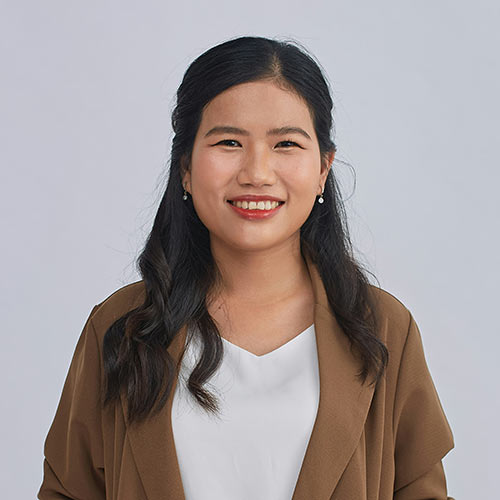
Hana Sayles holds a B.A. in Psychology and Education from Wellesley College and an M.A. in Counseling Psychology from Boston College, where her clinical training focused on adolescent identity development and the relationship between self-concept and academic motivation. Before joining Clarebourne she spent three years as a school counselor at the Classical High School in Providence — Rhode Island’s competitive public college-preparatory school — and two years as a college access advisor at College Advising Corps, working with first-generation college students in under-resourced high schools across Providence County.
That combination of experience — elite independent school culture on one side, first-generation access work on the other — gives her an unusually clear view of what college counseling looks like when it is working well and when it is serving the institution rather than the student. She came to Clarebourne specifically because of Malia Channing’s program philosophy, which she describes as the closest she has encountered to the model she would design herself.
Her work at Clarebourne focuses on the Grade 10 and 11 years — the self-knowledge and exploration phases she considers the most consequential in the entire sequence. She is the counselor students meet first, the one who asks the questions nobody else has asked them, and the one who will sit with a student through genuine uncertainty rather than resolving it prematurely with a list. She has particular expertise in supporting students who are considering financially sensible paths — in-state schools, merit scholarship programs, European institutions — and brings to those conversations the research depth and the complete absence of condescension that makes the advice actually useful.
She is also the team’s primary resource on the emotional and psychological dimensions of the college process — the anxiety, the family pressure, the identity questions that surface when a seventeen-year-old is asked to articulate who they are and what they want. Students who find the process overwhelming tend to find their way to her office. She considers that a feature rather than a problem.
“Most of my Grade 10 students have spent their entire academic lives optimizing for an outcome someone else defined. The first thing I ask them to do is stop — just for an hour — and tell me what they actually think about their own education. Not what they’ve achieved. What they think. Some of them have never been asked that question. Those are usually the most interesting conversations I have.”
Clarebourne since 2020