Find your people — or start a new group
Clarebourne has more than forty active student clubs. Every one of them was founded by a student who cared about something enough to find a faculty advisor, write a one-page proposal, and show up every week to make it happen.
What Clarebourne offers is a structure that makes it genuinely easy to start something new, and a culture in which the student who organizes a chess tournament or builds a competitive robotics team is regarded with the same respect as the student who captains a varsity sport. Student Government approves new club proposals and allocates a portion of the activities budget to support them. The process takes about three weeks.
How clubs work
All clubs meet after school, typically once or twice a week. Each club has a student president or coordinator and a faculty advisor who provides oversight and institutional continuity. The faculty advisor does not run the club — the student leadership does. Advisors are there to help navigate logistics, ensure safety, and occasionally remind students of things they have forgotten.
Club membership is open to all students in the relevant grade range. Most clubs are open to Grades 6 through 12. Some are division-specific — the Middle School Robotics Club, for instance, operates separately from the Upper School team, though the two collaborate during competition season. A full list of current clubs, meeting times, and faculty advisors is distributed to all students in September and is available on the family portal throughout the year.
Current Clubs
Academic and Intellectual
Robotics Club (Grades 6–12)
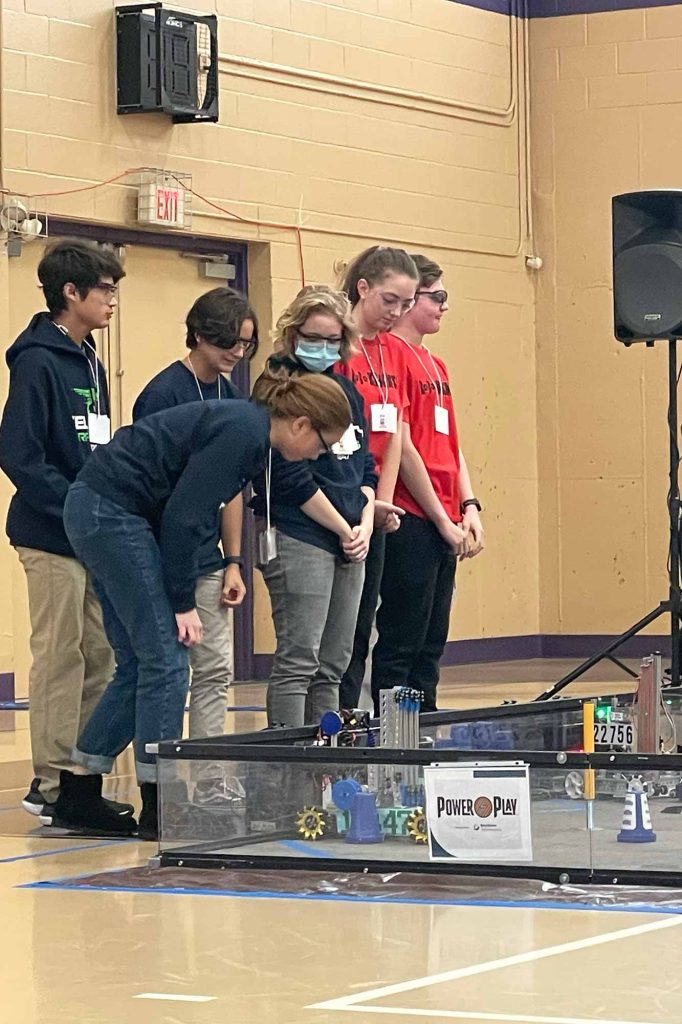
Clarebourne’s robotics program is one of the most active student organizations in the school. The Middle School team and the Upper School team each compete in the FIRST Robotics season — the Middle School in the FIRST LEGO League, the Upper School in the FIRST Tech Challenge. Both teams design, build, program, and compete with robots of their own construction. The Upper School team placed second in the Rhode Island regional FTC competition in 2023 and advanced to the state championship in 2024. New members are welcome at any experience level at the start of each year.
Faculty advisor: Mr. [name] · Meets: Tuesday & Thursday, 3:30–5:30 PM
Mathematics Club (Grades 6–12)
The Mathematics Club meets weekly to explore mathematical ideas that live outside the curriculum — competition problems, recreational mathematics, unsolved conjectures, and the occasional proof that has been sitting on a whiteboard for three sessions because nobody can agree whether it holds. Students participate in the American Mathematics Competition (AMC 8, AMC 10, and AMC 12 as appropriate) and the Rhode Island Mathematics Olympiad. Mr. Brennan advises the club and describes his role as showing up with interesting problems and getting out of the way.
Faculty advisor: Mr. Thomas Brennan · Meets: Wednesday, 3:30–4:45 PM
Chess Club (Grades 5–12)
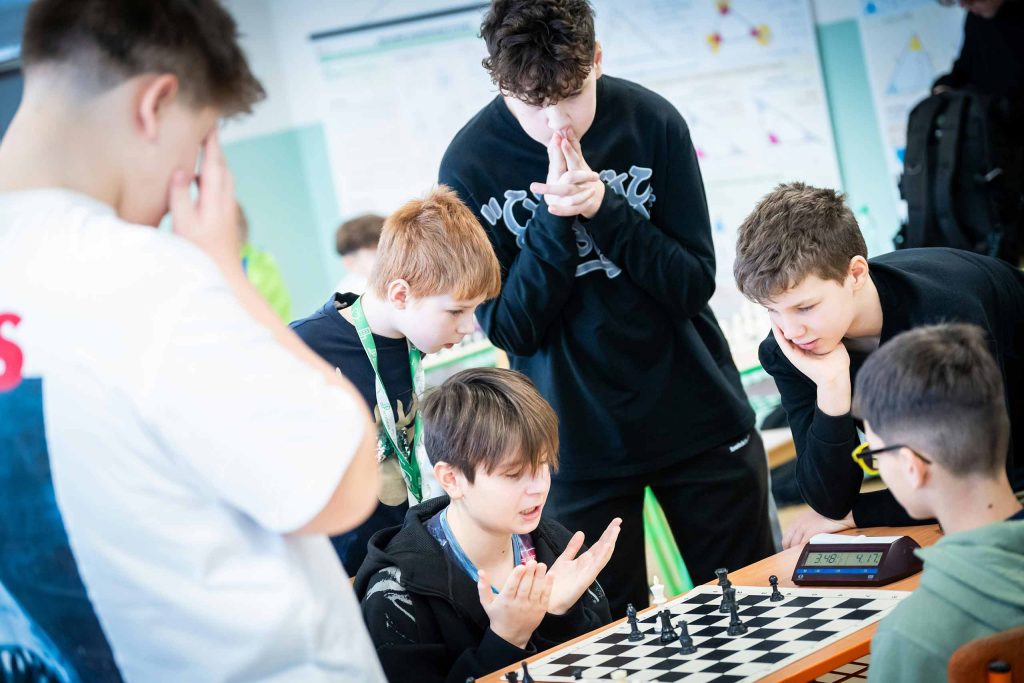
One of Clarebourne’s oldest clubs, founded in 1978 and continuously active since. The Chess Club meets weekly for informal play and hosts an annual invitational tournament — the Clarebourne Open — that draws players from twelve to fifteen schools across the region each spring. The club is entirely student-run; the faculty advisor’s primary role is booking the space. All skill levels welcome, from complete beginners to students who compete independently in rated tournaments.
Faculty advisor: [name] · Meets: Monday, 3:30–5:00 PM
Model United Nations (Grades 9–12)
Clarebourne’s MUN team competes at three to four collegiate conferences per year, including HMUN in Boston and NAIMUN in Washington D.C. The team is coached by Dr. Tanaka, whose document-based history curriculum turns out to be excellent preparation for committee work. Students who have participated in MUN for three or more years consistently describe it as the extracurricular that most directly developed their ability to argue, negotiate, and write under pressure.
Faculty advisor: Dr. Priscilla Tanaka · Meets: Thursday, 3:30–5:00 PM
Philosophy Club (Grades 8–12)
Started in 2019 by three eighth-grade students who wanted to continue a conversation that had started in advisory. The club meets weekly to read and discuss short philosophical texts — primary sources, not summaries — chosen by rotating student facilitators.
Faculty advisor: [name] · Meets: Tuesday, 3:30–4:45 PM
Mock Trial (Grades 9–12)
Clarebourne’s Mock Trial Team works with professional attorneys who volunteer with our students to prepare prosecution, and defense and witness testimonies. The team competes throughout the year and in 2016, 2018, and 2024 Clarebourne represented the state in the National Championships.
Faculty advisor: [name] · Meets: Monday & Wednesday, 3:30–5:00 PM
Arts Creative
Literary Magazine (Grades 6–12)
The student literary magazine, The Clarebourne Review, publishes poetry, fiction, creative nonfiction, and visual art once per year. An Upper School editorial board reviews all submissions — anonymised — and makes acceptance decisions independently. Ms. Whitman advises. She does not vote. Faculty advisor: Ms. Griselda Whitman · Meets: Wednesday, 3:30–4:45 PM
Student Newspaper (Grades 7–12)
The Clarebourne Record publishes six issues per year in print and maintains a continuously updated online edition. The paper operates with full editorial independence. It has covered school administrative decisions, student conduct matters, and local civic issues. The faculty advisor reviews for legal and ethical considerations. Content decisions belong to the student editors.
Faculty advisor: [name] · Meets: Tuesday & Thursday, 3:30–5:00 PM
Film Club (Grades 8–12)
Watches films. Argues about them. Makes a few short films each year that are screened at the Spring Arts Showcase. The watching-and-arguing portion is, members report, the majority of the program and the part they would least like to change.
Faculty advisor: [name] · Meets: Friday, 3:30–5:30 PM
Community and service
Environmental Action Club (Grades 6–12)
Manages Clarebourne’s on-campus sustainability initiatives — composting, the south campus garden beds built during Community Day 2022, and an ongoing energy audit project in partnership with a local environmental nonprofit. Has twice brought formal proposals to Student Government requesting changes to school purchasing policy. One was adopted.
Faculty advisor: [name] · Meets: Wednesday, 3:30–4:45 PM
Peer Tutoring Program (Grades 9–12)
Upper School students who have demonstrated strong performance in a subject can apply to tutor Middle School students who have requested support. Matches are made by the Academic Support Coordinator. Tutors receive training in how to explain rather than simply re-explain. Several students who began as tutees have gone on to become tutors in the same subject.
Faculty advisor: [name] · Meets: Flexible scheduling
Affinity and cultural groups (various grade ranges)
Clarebourne supports a range of student-led affinity and cultural groups that provide community, discussion, and programming for students with shared identities and experiences. Current groups include the Black Student Union, the Asian Student Alliance, the LGBTQ+ and Allies group, the South Asian Cultural Society, and the Latin American Cultural Club. Each group sets its own meeting schedule and programming agenda.
Miriam Castillo-Reyes serves as the administrative point of contact for all affinity groups.
Club sports and recreation
Sailing Club (Grades 6–12)
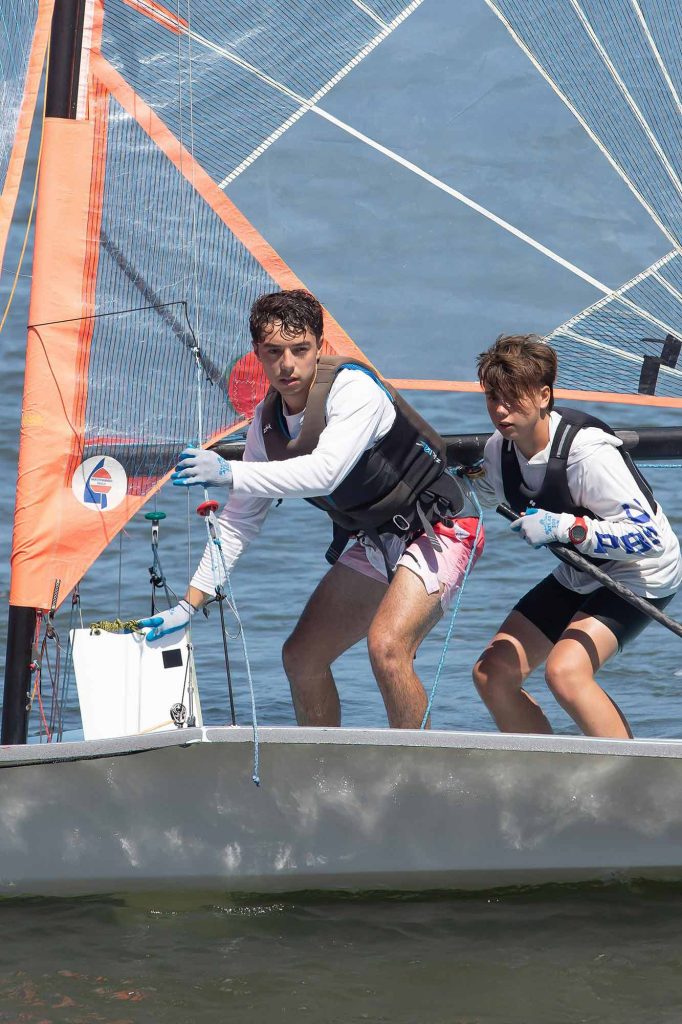
One of Clarebourne’s most distinctive offerings and one that reflects the school’s Newport County setting. The Sailing Club operates from a partner marina twelve minutes from campus and has access to a fleet of six Laser and two J/24 sailboats. Students learn to sail from scratch or develop existing skills, depending on experience. The club competes in the Interscholastic Sailing Association’s New England fleet racing circuit each spring. A valid boating safety certificate is required before sailing independently — the club facilitates this certification for new members in October.
Faculty advisor: [name] · Meets: Saturday mornings, April–June; Wednesday afternoons in spring term
Hiking and Outdoors Club (Grades 6–12)
Monthly day hikes in Rhode Island and southeastern Massachusetts, plus an annual overnight trip each October. No experience required. Moderate fitness helpful. Faculty advisor: [name] · Meets: Monthly, Saturday
Board Games and Strategy Club (Grades 5–12)
Exactly what it sounds like. Fridays after school. Heavily attended.
Faculty advisor: [name] · Meets: Friday, 3:30–5:30 PM
Founding a club
Don’t see what you’re looking for? Start it.
Any student in Grades 6 through 12 can propose a new club. The process is straightforward: a one-page written proposal describing the club’s purpose and intended membership, a faculty member who has agreed to serve as advisor, and a five-minute presentation to the Student Government activities committee. Proposals are reviewed at the first Student Government meeting of each month. Most are approved. Those that are not receive written feedback and an invitation to revise.
New clubs receive a small budget allocation from Student Government for their first year — enough for basic materials, entry fees for a competition, or the supplies needed to get started. Clubs that demonstrate sustained membership and active programming after one year become eligible for full annual budget consideration.
The only requirement Clarebourne makes of student clubs is that they do what they say they are going to do. A club that meets irregularly, loses its membership, and quietly disappears is not a failure — it is a student who tried something and learned something. A club that never quite gets off the ground is sometimes the seed of a better idea the following year.
If you have a question about starting a club, Student Government meets every other Tuesday and is the right first conversation.